Budgeting apps have one job: make you more aware of where your money goes. Most of them fail at this job because they're either too manual to maintain or too automated to be meaningful. After three months of testing six apps, we found two that are worth your time.
The Best Budgeting Apps: Quick Verdict
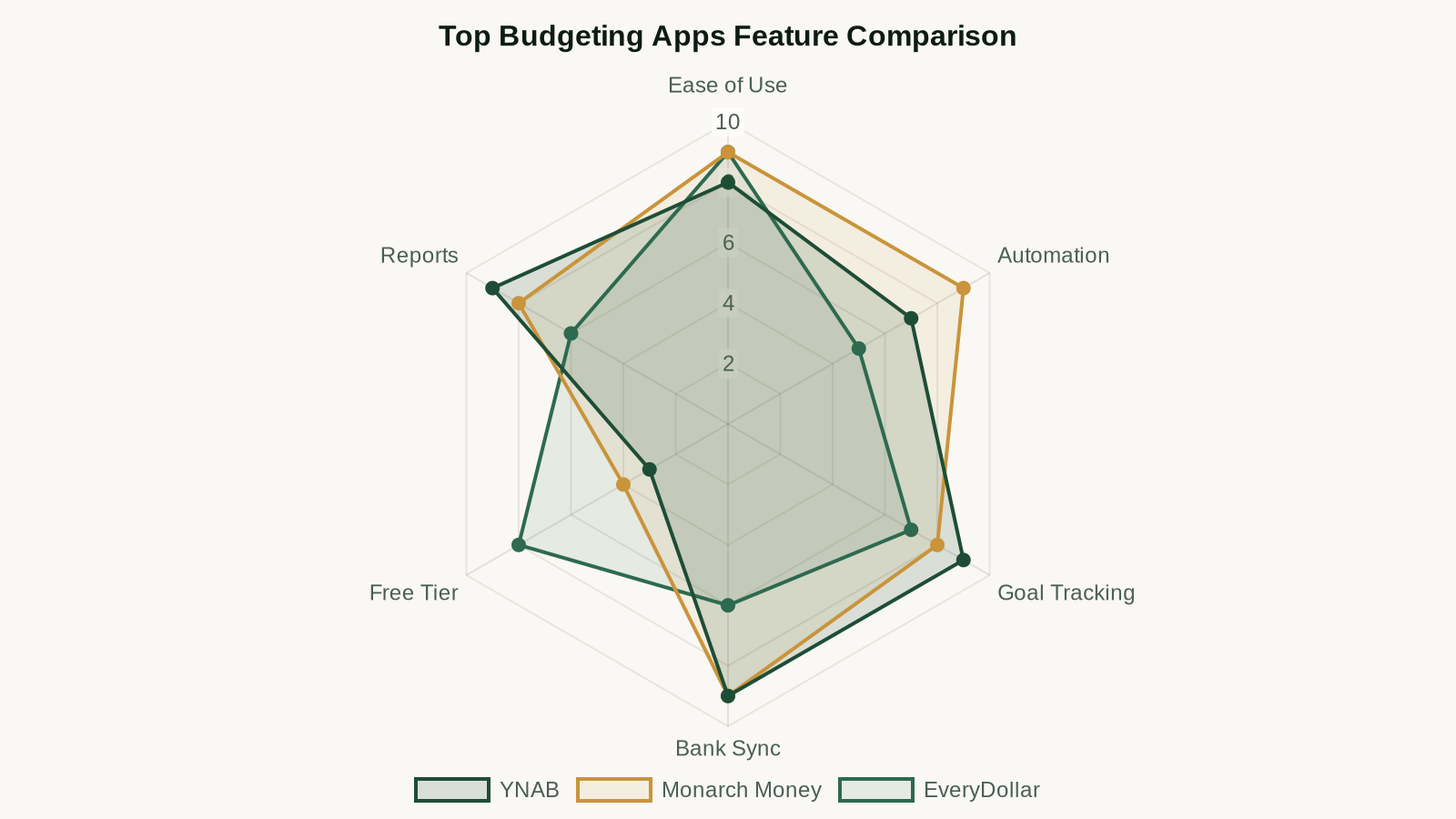
| App | Best For | Price | Method | Our Rating |
|---|---|---|---|---|
| YNAB ⭐ Best Overall | People serious about changing habits | $14.99/mo | Zero-based | 9.2/10 |
| Empower | Net worth tracking + passive oversight | Free | Aggregation | 8.7/10 |
| Copilot | Design-forward iPhone users | $13/mo | AI-categorized | 7.8/10 |
| Mint (Intuit) | Basic passive tracking | Free | Aggregation | 6.0/10 |
Why Most Budgeting Apps Don't Work
Here's the reality: the app isn't the problem. The problem is that most budgeting approaches require more ongoing friction than people can sustain.
The five reasons budgeting apps fail for most users:
- Miscategorized transactions — "Miscellaneous" becomes a catch-all that defeats the purpose
- Too many categories — Tracking 40 categories creates decision fatigue immediately
- No clear goal connection — Numbers without a purpose (pay off debt, build emergency fund) have no motivational pull
- Too much manual entry — Apps that require manual logging get abandoned within two weeks
- Reporting without insight — Seeing last month's spending graph does nothing if there's no action tied to it
Best Budgeting Apps: Detailed Reviews
1. YNAB (You Need a Budget) — Best Overall
$14.99/month or $99/year | iOS, Android, Web
YNAB is the only budgeting app built around a coherent philosophy: give every dollar a job before you spend it. This is the zero-based budgeting method, and it's genuinely effective at changing financial behavior — not just tracking it.
The learning curve is real. YNAB takes about two weeks to click. But users who get through that initial investment consistently report it's the first budgeting system that actually changed their spending patterns.
The $14.99/month price tag is the common objection. Our take: if YNAB doesn't save you more than $14.99/month — which most users report saving hundreds — you should cancel. The cost is only worth it if you engage with it.
2. Empower (formerly Personal Capital) — Best Free Option
Free for basic features | iOS, Android, Web
Empower's free tier is the best passive financial tracking tool available. Connect all your accounts — checking, savings, investments, mortgage, 401(k), credit cards — and you get a real-time net worth dashboard with spending breakdown, investment performance, and fee analysis.
It won't change your spending behavior the way YNAB does, but for people who want visibility into their full financial picture without paying a subscription, nothing beats it.
3. Copilot — Best for iPhone Users Who Care About Design
$13/month | iOS only
Copilot is what Mint should have been: beautiful, fast, and genuinely intelligent about categorization. AI-powered transaction categorization is surprisingly accurate out of the box, and the interface is the best-looking in the category.
The iOS-only limitation is the dealbreaker for Android users. For iPhone users who find YNAB's interface clunky, Copilot is the alternative.
Which Budgeting App Is Right for You?

- You want to change your habits: YNAB
- You want free passive tracking: Empower
- You have an iPhone and want beautiful design: Copilot
- You want the simplest possible option: Empower (free) or a spreadsheet
If you're unsure, start with Empower. It's free, requires no ongoing effort, and gives you a complete picture of your net worth in about 15 minutes. That alone is more financial clarity than most people have.
The Anti-Budget: An Alternative Approach
Some people genuinely don't want to track every dollar — and that's okay. The "anti-budget" approach works for people with sufficient income and savings discipline:
- Automate your savings and investments (these leave your account on payday)
- Pay your fixed bills (rent, utilities, subscriptions)
- Spend the rest without tracking
The logic: if you're hitting your savings targets, what you spend the rest on is irrelevant. The focus on savings rate rather than spending detail is more durable for most people long-term.
Build on this: Once your spending is under control, the next move is making sure idle cash is working hard. See the best high-yield savings accounts →
Budget Blueprint Kit
The complete budgeting system: PDF guide, auto-calculating Excel tracker, and AI prompt library. Build your surplus starting this week.
$27 one-time
Keep Reading



Get the Free Wealth Starter Kit
The step-by-step guide to your first $100K. Account setup, investment priorities, and a 12-month action plan.